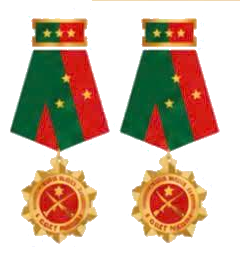

victory over the genocidal regime of Pol Pot - ieng Sary (January 7, 1979) Brightly Light of the Lofty international Spirit of the vietnam People’s Army
Keywords:
Cambodia; Genocide regime; Pol Pot - Ieng Sary; Vietnam People’s Army.Abstract
Responding to the appeal to the “Cambodian nation salvation” of the National United Front for National Salvation of Cambodia and the fraternal Cambodian people, promoting the proletarian international spirit, in late 1978 and early 1979, the Vietnamese Party and State decided to send the Volunteer Army to help the Cambodian revolutionary armed forces to liberate the nation from genocide, opening an era of revival for the country. The article seeks to contribute to clarifying the “fate” of the Cambodian people on the abyss of genocide. It also affirmes the lofty international role and responsibility of the Vietnamese Volunteer Army. And at the same time it disposes devastatingly of distorted arguments to the historical truth of reactionary forces when they claimed “Vietnam “invaded” Cambodia”.
References
1. Ban Liên lạc cựu Chuyên gia quân sự Việt Nam giúp Campuchia (2007), Kỷ yếu 8 năm hoạt động của Ban Liên lạc cựu Chuyên gia Việt Nam giúp Campuchia (1998 - 2006), Nxb Giao thông vận tải, Hà Nội.
2. Báo Nhân Dân, Ngày 7/1/1979 - Một ngày đẹp nhất về tình hữu nghị Việt Nam - Campuchia, ngày 6/1/2009.
3. Bộ Quốc phòng - Viện Lịch sử quân sự Việt Nam (2010), Lịch sử Quân Tình nguyện và Chuyên gia quân sự Việt Nam giúp cách mạng Campuchia (1978 - 1989), Nxb Quân đội nhân dân, Hà Nội.
4. Bộ Quốc phòng - Viện Lịch sử quân sự Việt Nam (2014), Lịch sử quân sự Việt Nam, tập 13, Nxb Chính trị quốc gia, Hà Nội.
5. Trường Chinh (1979), Về vấn đề Campuchia, Nxb Sự thật, Hà Nội.
6. Boraden Nhem (2009), The third Indochina conflict: Cambodia’s total war, Master of Military art and science military history, University of Deleware, Newark, Deleware.
7. Etcheson, Craig (2005), After the Killing Fiel: Lessons from the Cambodian Genocide, Greenwood. ISBN 978-0275985134.
8. Haris C. Mehta - Julie B. Mehta (2008), Hun Sen - Nhân vật xuất chúng của Campuchia, (người dịch: Lê Minh Cẩn), Nxb Văn học, Hà Nội.
9. Nghị quyết Hội nghị Quân ủy Trung ương ngày 30/8/1979. Tài liệu lưu tại Trung tâm Lưu trữ Bộ Quốc phòng, phông Quân ủy Trung ương, hồ sơ số 263.
10. Nôrôđôm Xihanúc (2003), Từ cuộc chiến chống CIA đến người tù của Khmer Đỏ, Nxb Công an nhân dân, Hà Nội.
11. Đào Duy Thủy, Tượng đài Quân tình nguyện Việt Nam trong lòng nhân dân Campuchia. Nguồn: http://cand.com.vn/Su-kien-Binh-luan thoi-su/Tuong-dai-quan-tinh-nguyen-Viet-Nam trong-long-nhan-dan-Campuchia-192861/.
12. Trung Hiếu, “Bài học xương máu từ chế độ diệt chủng Pol Pot - Khmer Đỏ”, Báo điện tử của Đảng Tiếng nói Việt Nam (VOV), ngày 7/1/2014. Nguồn: https://vov.vn/the-gioi/ho-so/ bai-hoc-xuong-mau-tu-che-do-diet-chung-pol pot-khmer-do-355913.vov.
13. Trung tâm Khoa học xã hội và nhân văn quốc gia (2001), Việt Nam trong thế kỷ XX, tập 1, Nxb Chính trị quốc gia, Hà Nội.
14. Uwe Ewald, Ksenija Turkovic (2006), Large-scale Victimisation as a Potential Source of Terrorist Activites: Importance of Regaining Security in Post-conflict Societies, IOS Press, ISBN 978-1586036942.
15. “Hun Sen, người con của Campuchia” - Kỳ 5: Giải phóng Campuchia, Tuổi trẻ Online, ngày 19/10/2008.
Downloads
Published
Issue
Section
License
Copyright (c) 2024 Tạp chí CL&LS QPVN

This work is licensed under a Creative Commons Attribution-NonCommercial 4.0 International License.
Điều khoản giấy phép
-
Tác giả đồng ý áp dụng Giấy phép bản quyền mở (ví dụ: Creative Commons CC BY hoặc CC BY-NC) cho bài báo khi được công bố.
-
Xác nhận người đọc có quyền truy cập, chia sẻ, trích dẫn bài viết theo đúng điều kiện giấy phép mà Tạp chí đã lựa chọn.
-
Tác giả giữ quyền tác giả nhưng cấp cho Tạp chí quyền xuất bản đầu tiên (First Publication Rights).